


A soft patch, lifting edge or damaged panel is a reason to check your trailer floor, not cover it and carry on. Before ordering replacement flooring, you need to know what supports the load, which material belongs in your trailer and whether the structure underneath is still sound.
This guide explains trailer floor replacement materials, thickness, costs and the main stages of the job. It also covers how to find the right Ifor Williams flooring panel and when to ask a workshop to assess the repair.
What should you use to replace a trailer floor?
Use flooring approved for the trailer's model, load and supporting structure. Resin-coated plywood is used on many trailers, but there is no universal thickness. Aluminium treadplate can be an overlay rather than the load-bearing floor. Replace damaged supporting material, check the chassis beneath it and use the specified fixings and sealing system.
Jump to section
- Signs your trailer floor needs attention
- Plywood, aluminium or a model-specific floor?
- What thickness should trailer flooring be?
- Finding the correct Ifor Williams floor
- How much does trailer floor replacement cost?
- What replacing a trailer floor involves
- DIY or professional replacement?
- Frequently asked questions
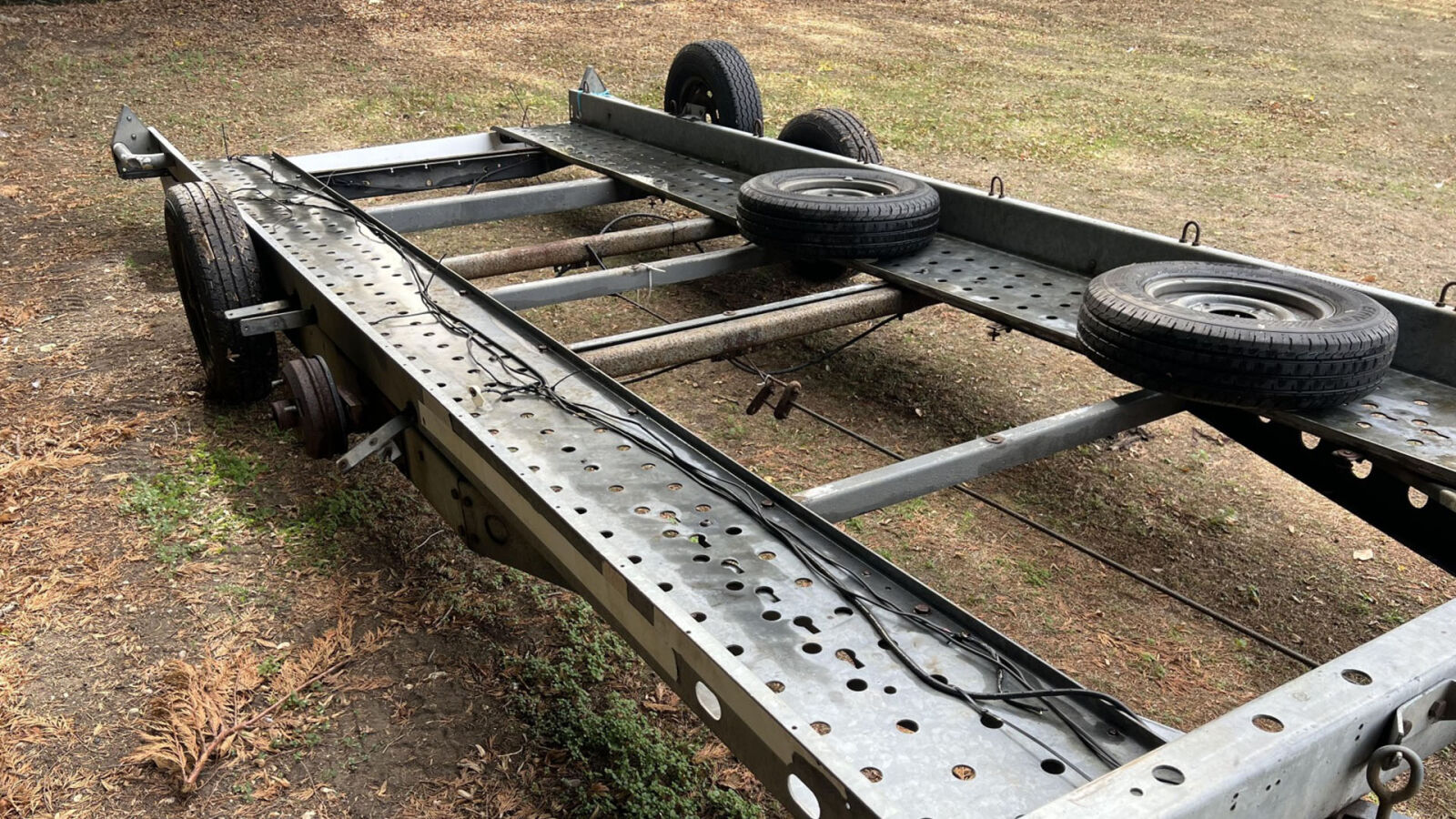
How do you know when a trailer floor needs replacing?
Look beyond the surface you stand on. Matting, coatings and metal overlays can hide damage underneath. Check accessible edges, joints, fixing positions and the underside where it is safe to view without getting beneath an unsupported trailer.
- Softness or sagging: a section feels weak or no longer sits flat.
- Swollen or separating plywood: layers lift apart, particularly around edges and fixings.
- Holes, cracks or impact damage: the load-bearing panel is visibly compromised.
- Loose fixings or movement: the panel moves against its supports.
- Damage beneath a covering: moisture or deterioration is visible when removable mats are lifted.
A worn surface does not automatically mean the whole floor needs replacing. Equally, a tidy surface does not prove that the floor is sound. If the panel or its supports may be unsafe, stop loading the trailer and arrange an inspection. Do not test a suspect floor by standing or driving machinery on it.
Horse trailer floors need particular care
Lift removable rubber mats where practical and inspect the floor beneath them. Ifor Williams warns that rotten, damp or damaged plywood can fail, and that aluminium floors also need regular inspection. Rubber matting is not a substitute for a sound supporting floor.
Ask about a trailer floor inspection
What is the best material for a replacement trailer floor?
The best starting point is the manufacturer's specification, not the cheapest sheet of a similar size. A complete plywood floor, an aluminium overlay and a purpose-built aluminium floor are different components.

Resin-coated plywood flooring
Used across many trailer models, with a protective resin coating and a textured upper surface. Available in different sizes, thicknesses and model-specific configurations.

Aluminium chequered floor sheet
The Ifor Williams GX126 C494852 is a model-specific aluminium chequered plate floor sheet measuring 1840mm x 3675mm x 2mm. It must be used with the correct supporting floor construction.
Phenolic resin-coated plywood
Often sold as phenolic ply or trailer flooring board, this combines a plywood panel with a protective surface coating. GT Towing supplies general-size sheets and Ifor Williams model-specific panels. The textured face provides a practical loading surface, but the panel grade, thickness and support arrangement still need to suit the trailer.
Do not treat the coating as permanent protection for every cut edge. Newly exposed edges need the sealing treatment specified for the panel and installation.
Aluminium treadplate over plywood
On some trailers, aluminium treadplate is a protective covering fitted over plywood. Ifor Williams lists this arrangement for its LT and LM flatbeds. Replacing the top sheet alone will not repair rotten plywood underneath.
The GX126 aluminium chequered plate sheet pictured above is a good example of why exact model compatibility matters. A thin aluminium sheet must not be assumed to replace the complete load-bearing floor or its supporting structure.
Purpose-built aluminium floors
Other trailers use a designed aluminium floor system. Its planks, profiles, supports and fixings should be replaced with compatible components. Do not assume a sheet of aluminium can replace a timber floor, or vice versa, without checking the approved construction.
What about marine plywood? The label alone does not tell you whether a panel is suitable for your trailer. Confirm its structural specification, thickness, surface and installation requirements before substituting it for the original flooring.
What thickness should trailer flooring be?
There is no single correct thickness for every trailer. GT Towing stocks both 12mm and 18mm phenolic flooring sheets, but that does not make them interchangeable.
The required specification depends on the trailer design, spacing of the supports and the loads being carried. Machinery wheels, feet and other concentrated loads can place different demands on a floor from evenly distributed goods.
Check the original specification or replacement part number. Measuring an existing panel can help, but a swollen, worn or previously replaced floor is not reliable proof of what should be fitted.
A thicker floor is not automatically an upgrade. It can affect the fit of ramps, doors, trims and fixings, and extra weight reduces the payload available within the trailer's existing weight limit.
How to find the correct Ifor Williams replacement floor
Start with the model and serial number, then check the particular panel. Similar-looking trailers can use different floor layouts, and one product listing may be for a single section rather than the complete floor.
For example, GT Towing's C69501B flooring panel is listed for specified LT/LM applications and the P6e. The listing explains that LM flatbeds require more than one sheet and that certain models also need a half sheet. Ordering one panel is not necessarily ordering a complete replacement floor.
Before buying, have these details ready:
- The trailer model, serial number and approximate age.
- The floor material, panel thickness and dimensions.
- The number of sections, joint positions and any separate ramp or beavertail panels.
- Photos of the floor, edges, fixings and any visible damage.
Use our Ifor Williams data plate guide if you need help identifying the trailer. You can then browse GD flooring and panels, LT and LM flooring, or search parts by trailer model.
How much does trailer floor replacement cost?
The total depends on the correct panel or floor system, how many sections are needed, the condition of the supports and the labour involved. A sheet price is not a fitted replacement price.
These GT Towing prices give a useful starting point for budgeting:
| Flooring product | Price including VAT |
|---|---|
| 8ft x 4ft x 18mm phenolic plywood sheet | £162.00 |
| 10ft x 5ft x 12mm phenolic plywood sheet | £222.00 |
| 10ft x 5ft x 18mm phenolic plywood sheet | £288.00 |
| Ifor Williams C69501B plywood panel | £180.00 |
| Ifor Williams GX126 aluminium chequered floor sheet C494852 | £570.00 |
Prices checked on 20 October 2026. These are individual sheet or panel prices, not complete floor kits or fitted quotations. All five items are listed as collection-only. Check the linked products for current prices and availability.
Allow separately for the correct fixings, sealing materials, removal and disposal of the old floor, fitting and any repairs to the structure underneath. A horse trailer floor or specialist aluminium system needs its own quotation, not a price based on a general plywood sheet.
For collection, GT Towing is on the Great North Road in Welham Green, near Hatfield, Hertfordshire, AL9 5SD. Confirm the panel and collection arrangements before travelling.
What does replacing a trailer floor involve?
The following is a planning overview for a replacement plywood floor, not a universal workshop procedure. Removal methods, panel joints, support spacing and fixings differ between trailers.
1. Identify the floor and make the trailer safe
Confirm the replacement specification first. Empty the trailer and secure it against movement. Never work beneath a trailer supported only by a jack, or beneath a raised tipping body without its approved mechanical support.
2. Remove the damaged panels and inspect the supports
Record the panel layout and fixing positions before removal. Check exposed crossmembers, joints and mounting points for corrosion, cracks or other damage. Structural problems need resolving before a new floor is fitted.
3. Check fit and protect exposed edges
Follow the specified panel layout and joint clearances. Plywood edges and joints need proper support; unsupported joins are not a sound shortcut. Seal cut edges using the panel supplier's recommended treatment before assembly.
4. Fit with the correct fasteners and sealing materials
Use the trailer's specified fixings and installation method. Do not substitute a general-purpose screw or assume joint sealant replaces edge treatment. Follow the relevant instructions for screw positions, joint sealing and curing time.
5. Inspect the finished installation
Check panel support, fixings, trims, door and ramp operation, and any wiring disturbed during the work. Do not load the trailer until the installation is complete and any required professional checks have been carried out.
Fixings and sealant: check these with the panel

Ifor Williams floor screws
F1262ZPK is supplied as a pack of 50. Confirm the correct fixing and quantity for your trailer rather than assuming one pack suits every floor.

Floor joint sealant
GT Towing lists brown Bond + Seal for sealing floor edges to trailer sides. Confirm suitability and follow its application instructions. This item is collection-only.
Can you replace a trailer floor yourself?
A capable owner may be able to replace a straightforward, correctly specified panel. The harder judgement is whether the floor supports are sound and whether the new installation will carry the intended load safely.
Get professional advice for horse trailers, structural corrosion, damaged crossmembers, specialist floor systems or any installation where the correct panel or fixing method is unclear. Covering a weak floor with another board or metal sheet is not a reliable repair.
GT Towing's NTTA Trusted Workshop is in Welham Green, near Hatfield. Send your trailer details and clear photographs to discuss an inspection, replacement parts or the next steps for a repair. Photos help identify the job, but cannot confirm the structural condition on their own.
Enquire about a floor repair Find replacement flooring
Trailer flooring questions
Can I put new plywood over a rotten trailer floor?
Do not treat an extra layer as a repair for rotten or damaged load-bearing material. The old floor and its supports need assessing so the cause of the weakness is addressed.
Is 18mm plywood suitable for every trailer?
No. Thickness is only one part of the specification. Panel construction, supports, fixings and the intended load also matter. Match the approved replacement, not just the nearest sheet thickness.
Is aluminium trailer flooring maintenance-free?
No. Aluminium floors, fixings and supports still need inspection. Also check whether the visible aluminium is the structural floor or an overlay covering another material.
Does a replacement floor increase trailer payload?
A new floor does not increase the trailer's plated maximum gross weight. A heavier replacement reduces the remaining load allowance. Any change of floor system needs checking for compatibility.
Can GT Towing help identify the correct flooring?
Contact the team with the trailer model, plate details, measurements and photographs. This helps establish which panel or floor system to check before you order.
Technical sources: Ifor Williams floor inspection guidance, LT and LM floor construction and WISA plywood installation guidance. General plywood guidance is not a substitute for the instructions for your particular trailer and panel. Product examples link to GT Towing's own specifications.