


Trailer lights that suddenly stop working can be frustrating, but the fault is often easier to narrow down than it first appears.
A failed bulb or LED unit may affect just one light. A poor earth can cause several lights to behave strangely at once. A dirty or damaged plug can make the whole trailer appear dead, while sometimes the fault is actually on the towing vehicle rather than the trailer.
This guide takes you through the problem logically, starting with the quickest checks before moving onto plugs, sockets, wiring, earth connections and individual light units.
If the trailer's required road lights are not working correctly, fix the fault before towing it on the road.
View Wiring Diagrams Get Help With Trailer Electrics
Jump to section
- Start with these quick checks
- What does the fault tell you?
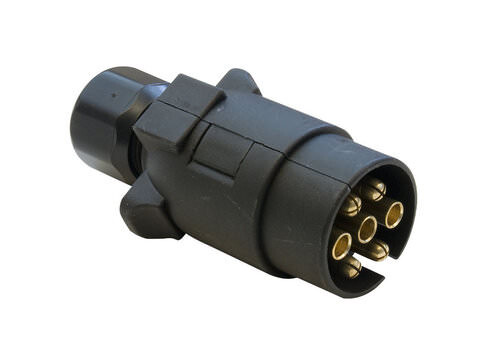
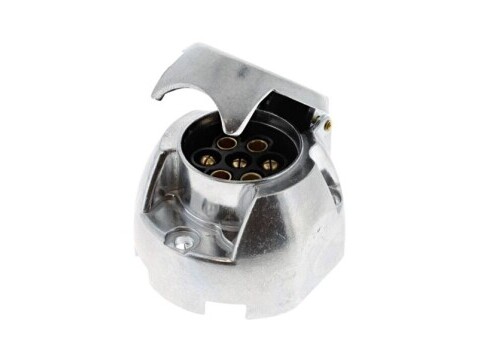
- Check the trailer plug and socket
- Check for a poor earth connection
- If only one trailer light is not working
- Check the trailer wiring
- Could the fault be on the towing vehicle?
- Troubleshooting LED trailer lights
- 7 pin, 8 pin and 13 pin trailer electrics
- When to stop troubleshooting
- Trailer electrical repairs at GT Towing
- Frequently asked questions
Trailer lights not working? Start with these quick checks
Before removing light units or taking a plug apart, start with the simple things. Many trailer lighting faults can be traced to the connection between the towing vehicle and trailer.
- Disconnect and reconnect the trailer plug. Make sure it is fully seated and locked into the socket correctly.
- Check which lights are affected. Test the indicators, brake lights, tail lights, fog light and reverse light where fitted.
- Look inside the plug and socket. Check for dirt, water, corrosion, bent contacts or obvious damage.
- Inspect the cable. Look for crushed sections, cuts, exposed wires or places where it may have been trapped.
- Check the light itself. A damaged lens, failed bulb or failed LED unit may be the only problem.
- If possible, isolate the fault. Try the trailer on another known-good towing vehicle, or connect a known-good trailer or light board to your vehicle.
That last test can save a lot of time. If another trailer works perfectly on the same vehicle, the problem is likely to be on your trailer. If two trailers show the same fault, start looking at the vehicle socket or towbar electrics instead.
What does the trailer lighting fault tell you?
The pattern of the fault can often point you towards the most likely cause.
| Symptom | Possible causes | Check first |
|---|---|---|
| No trailer lights work | Plug connection, socket supply, earth, fuse, towbar electrics or main trailer cable | Plug and socket connection |
| One light does not work | Bulb, LED unit, local connector or wiring to that lamp | The affected light unit |
| Several lights behave strangely | Poor earth, corrosion or incorrect wiring | Earth connection and plug terminals |
| Lights flicker or cut in and out | Loose connection, worn plug, corrosion or damaged cable | Plug, socket and cable condition |
| One side of the trailer is affected | Local wiring fault, connector, lamp cluster or earth issue | Wiring and lights on that side |
| 13 pin plug will not connect | Plug may have become misaligned | Position of the locating section |
A symptom table will not diagnose every electrical problem, but it helps avoid replacing parts at random.
1. Check the trailer plug and socket
The plug and socket are exposed to water, road dirt and repeated connection and disconnection, so they are a logical first place to look.
Disconnect the trailer and inspect both sides of the connection carefully.
Look for:
- Green or white corrosion around contacts
- Dirt or moisture inside the plug or socket
- Bent or damaged pins
- Loose terminal connections
- Cracked plug or socket housings
- A cable pulling away from the plug body
- Burnt, darkened or overheated contacts
If the connection is simply dirty, clean it carefully using a suitable electrical contact cleaner and allow it to dry before reconnecting.
If contacts are badly corroded, loose or damaged, replacing the plug or socket may be more reliable than repeatedly trying to clean it.
Does your 13 pin plug refuse to fit the socket?
A 13 pin plug that suddenly will not connect may not have an electrical fault at all. The inner locating section can twist out of alignment, stopping the plug from fitting correctly.
GT Towing has a separate step-by-step guide showing how to realign a 13 pin trailer plug.
2. Check for a poor trailer earth connection
Earth faults are responsible for some of the strangest trailer lighting symptoms.
A lamp needs both a power supply and a reliable return path. If the earth connection becomes loose, corroded or damaged, current can sometimes find an alternative path through another lighting circuit.
That can result in symptoms such as:
- Brake lights affecting the indicators
- Indicators making other lamps flash
- Lights becoming dim when several functions are used together
- Several lights failing at the same time
- Intermittent or unpredictable behaviour
If several unrelated lights start behaving strangely together, an earth fault should be high on the list of things to investigate.
Check earth terminals for loose connections, corrosion, broken wires or obvious damage. On a trailer with several junctions or lighting units, the problem may be local to one part of the trailer rather than the main plug.
3. If only one trailer light is not working
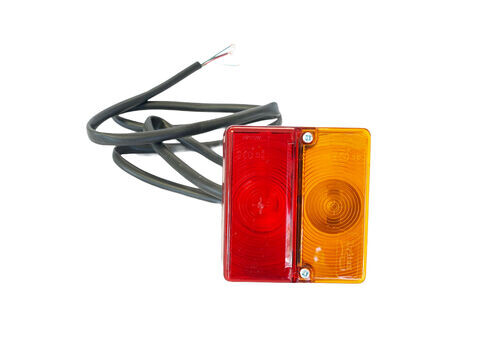
If every other lighting function works normally and only one lamp has failed, start at that individual light rather than dismantling the trailer plug.
Traditional bulb lights
Remove the lens where the unit is designed to be opened and inspect the bulb.
Check for:
- A broken filament
- Corrosion around the bulb holder
- Loose contacts
- Water inside the lamp
- A damaged lens allowing moisture to enter
Replacing the bulb is a sensible first step if it has clearly failed, but persistent corrosion or water ingress may mean the complete light unit needs attention.
LED trailer lights
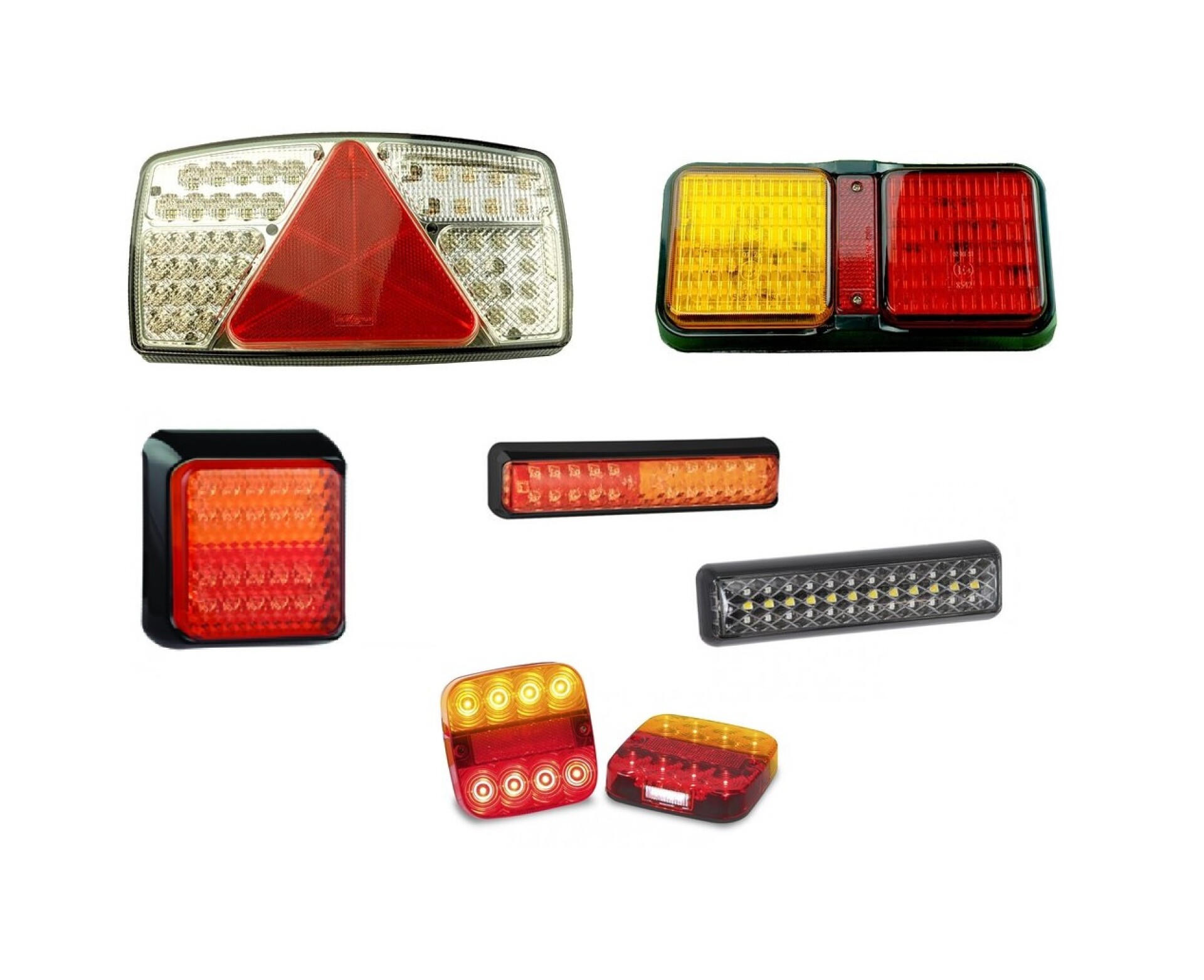
Many modern trailer light units use sealed LEDs rather than replaceable bulbs. If part or all of a sealed LED unit fails, the complete lamp may need to be replaced.
Before replacing it, check the connector and wiring supplying the unit. A new lamp will not solve a broken feed or poor connection further up the circuit.
4. Check the trailer wiring and cable
If the plug appears healthy and the light unit itself is working, the fault may be somewhere between the two.
Follow the trailer cable as far as you can safely inspect it and look for areas where it may have:
- Rubbed against the chassis
- Been trapped or crushed
- Split or cracked
- Been damaged near a hinge or moving section
- Come loose from a junction box or connector
- Been repaired previously
Pay particular attention to places where the cable passes through metal sections, around the drawbar and into junction boxes.
A fault hidden inside the cable is harder to confirm visually. If you are comfortable using electrical test equipment, continuity and voltage tests can help narrow down where the supply is being lost. If not, this is usually the point where professional electrical fault finding saves time.
Do not assume wire colours are correct
Previous repairs, replacement plugs and different electrical systems can all mean the wiring no longer matches what you expect.
Use the terminal numbers and the correct diagram for your connection type rather than relying on wire colour alone.
5. Could the problem be with the towing vehicle?
If the trailer wiring appears healthy, do not automatically assume the fault must still be on the trailer.
The tow vehicle supplies power through its socket and, on many modern vehicles, through dedicated towbar electrical equipment or a trailer control module.
Possible vehicle-side problems include:
- A damaged or corroded towbar socket
- A blown fuse
- A fault in the towbar wiring
- A towbar electrical module fault
- A poor vehicle-side earth
- A problem with the vehicle's own lighting circuit
Check the vehicle handbook before inspecting or replacing fuses. Always replace a failed fuse with the specified rating rather than fitting a higher-rated fuse.
If a replacement fuse fails again, there is likely to be an underlying electrical problem that needs diagnosing rather than another fuse.
The quickest way to separate vehicle and trailer faults
If possible, connect a known-good trailer or light board to the towing vehicle.
- If the known-good trailer works: concentrate on your trailer.
- If it shows the same fault: investigate the towing vehicle and its socket.
The reverse test works too. Connecting your trailer to another known-good tow vehicle can help confirm which side of the connection contains the fault.
6. Trailer LED lights flickering or not working properly
LED lights use far less current than traditional bulbs and are now common on trailers, light boards and cycle carriers.
If an LED trailer light is flickering, intermittent or not behaving as expected, check the same basic areas first:
- The plug and socket connection
- The earth circuit
- The connector at the LED lamp
- Damaged or pinched wiring
- Water ingress
Some towing vehicles also monitor trailer lighting electrically. Problems can occasionally occur when the towing electrics or control system is not correctly matched to the trailer lighting setup.
If several LED lights behave incorrectly but the trailer wiring appears sound, the vehicle's towbar electrics may need testing.
7 pin, 8 pin and 13 pin trailer electrics
Before opening a plug or following a wiring diagram, make sure you know which connection system the trailer uses.
7 pin trailer electrics
The traditional 7 pin, or 12N, connection is commonly used for standard trailer road lighting such as indicators, brake lights, tail lights and the rear fog light.
If your 7 pin plug needs rewiring rather than fault finding, see our step-by-step 7 pin trailer plug guide.
8 pin trailer electrics
Many newer trailers use an 8 pin arrangement that adds a reverse light circuit to the normal road lighting functions.
Always follow the correct 8 pin diagram for the plug and trailer you are working on.
13 pin trailer electrics
A 13 pin connection is widely used for modern trailer and caravan electrics and can carry the standard road lighting functions alongside additional circuits where required.
If you are unsure which system you have, GT Towing's 7 pin, 8 pin and 13 pin trailer plug guide explains the differences in more detail.
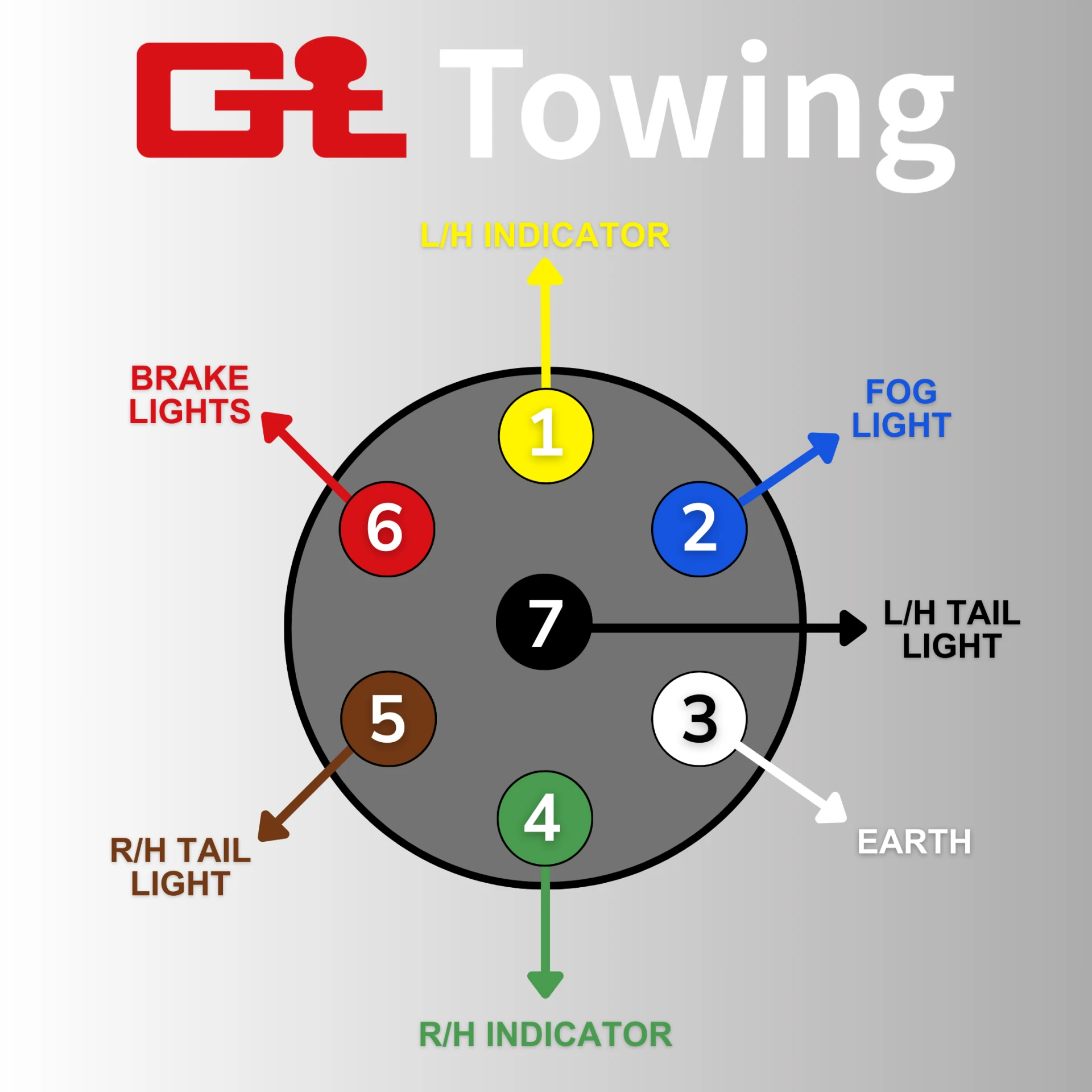
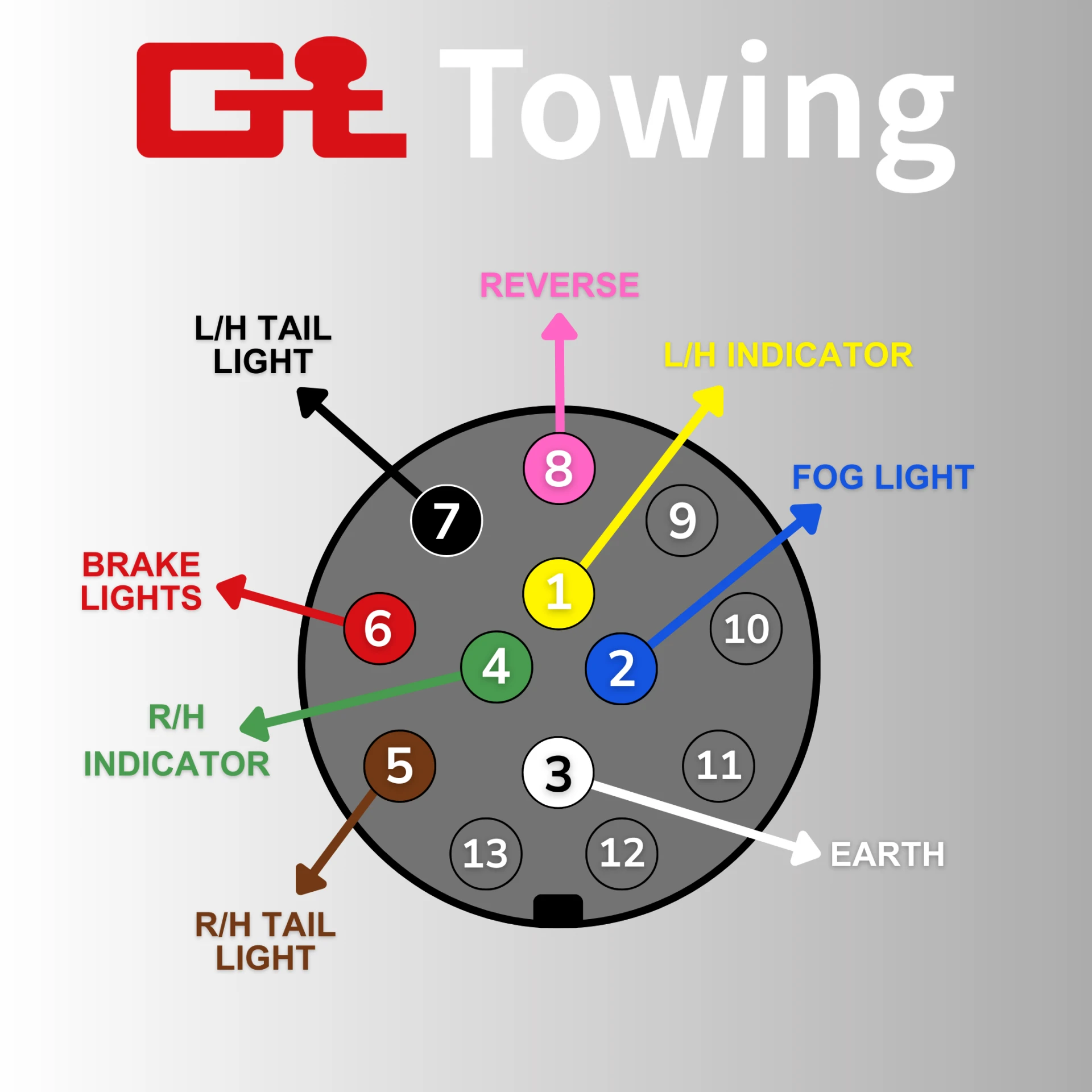
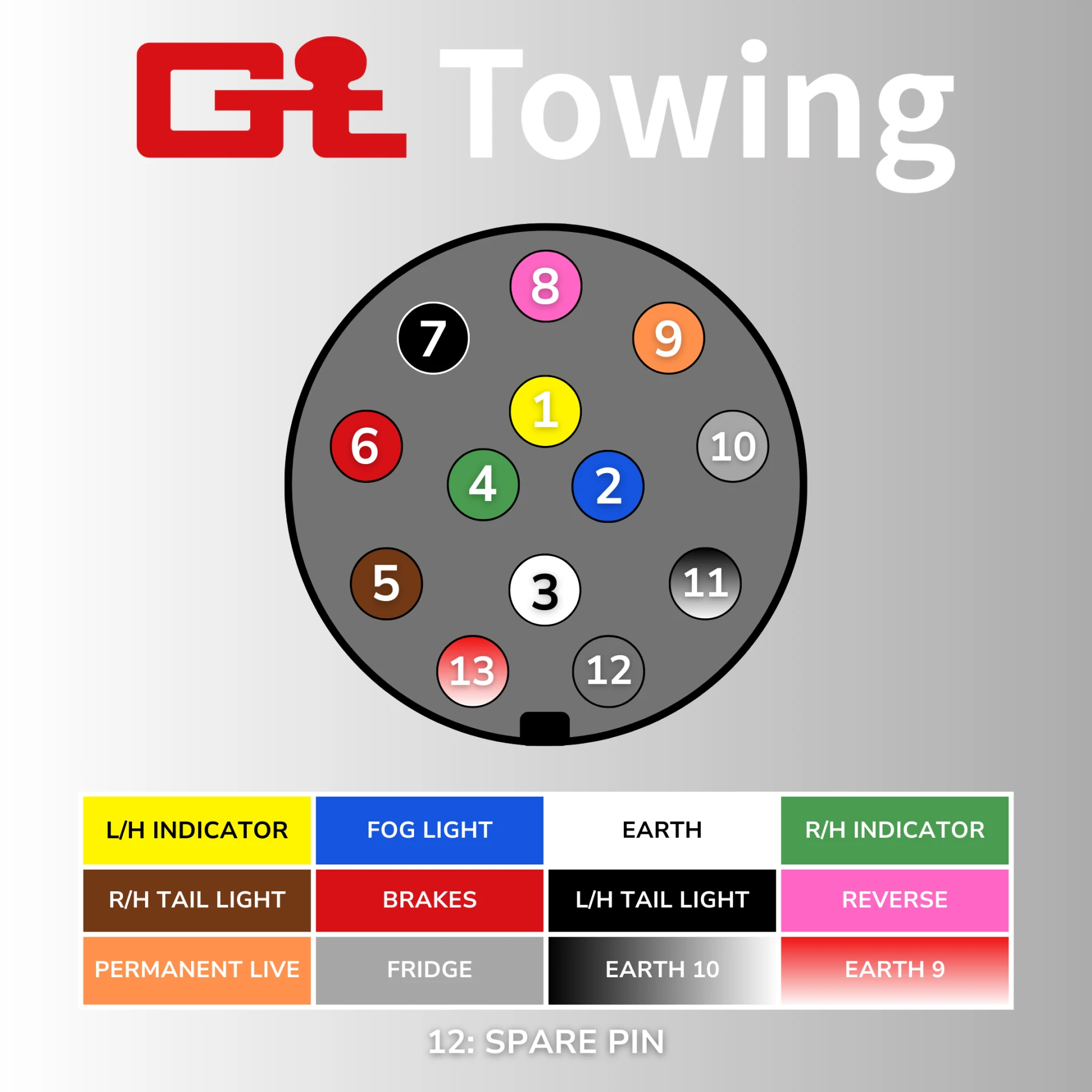
See 7, 8 & 13 Pin Wiring Diagrams
When should you stop troubleshooting and get help?
Basic checks such as inspecting plugs, replacing a failed bulb or identifying visible cable damage are straightforward. Electrical faults become more difficult when the problem is hidden inside the loom, towing vehicle or control equipment.
It is sensible to stop and get the system checked if you find:
- Repeatedly blown fuses
- Burnt or melted electrical connections
- Exposed or badly damaged wiring
- Persistent water ingress
- Several circuits failing together without an obvious cause
- An intermittent fault you cannot reliably reproduce
- A suspected towbar control module or vehicle wiring fault
Replacing parts without confirming the cause can become more expensive than diagnosing the fault properly.
Trailer light and electrical repairs at GT Towing
If the checks above have not identified the problem, GT Towing can inspect and repair trailer lighting and electrical faults at our workshop in Welham Green, near Hatfield.
Our trailer servicing and repair work includes checks of the trailer lights, wiring and electrical connection, alongside the other components that affect the safe operation of the trailer.
We work on Ifor Williams trailers as well as horse trailers, car transporters, commercial trailers and trailers from other manufacturers.
If you already know which part has failed, GT Towing also stocks trailer plugs, sockets, lighting units and electrical components for a wide range of trailers.
Book A Trailer Repair Shop Trailer Lights
Trailer light troubleshooting FAQs
Why are none of my trailer lights working?
If every trailer light has stopped working, start by checking the plug and socket connection. Other possible causes include a poor earth, damaged main cable, blown vehicle fuse or a fault with the towbar electrics.
Why do my trailer lights work intermittently?
Intermittent trailer lights are commonly associated with loose connections, corrosion, worn plugs or sockets, damaged cable or a poor earth connection.
Why do other trailer lights flash when I use the indicators?
If several lights interact with each other, a poor earth connection is one of the first things to investigate. Incorrect wiring or corrosion inside a plug, junction or lamp can produce similar symptoms.
Why is only one trailer light not working?
If every other function is operating correctly, inspect the affected bulb or LED unit, its connector and the local wiring supplying that light.
How can I tell if the fault is on the trailer or the car?
One of the simplest tests is to connect a known-good trailer or light board to the vehicle. If that shows the same fault, the tow vehicle or socket is likely to need investigation. You can also test your trailer on another known-good tow vehicle.
Where can I find trailer plug wiring diagrams?
GT Towing has wiring diagrams for 7 pin, 8 pin and 13 pin trailer plugs and sockets, along with dedicated how-to guides for common trailer electrical jobs.
View Wiring Diagrams Get Help With Trailer Electrics
Wrapping up
When trailer lights stop working, the quickest approach is to diagnose the pattern of the fault before replacing anything.
Start with the plug and socket, identify exactly which functions have failed and then work logically through the earth connections, individual lights and trailer wiring. If the trailer appears healthy, move your attention to the towing vehicle and its electrical system.
A single failed lamp may be a simple fix. Several lights interacting with each other often point towards an earth or wiring problem, while complete loss of all trailer lighting can indicate a problem with the main connection or vehicle-side supply.
If the fault is not obvious, GT Towing can help with trailer electrical fault finding, lighting repairs and replacement electrical parts.
Book A Trailer Repair Contact GT Towing